
6ft · 8ft
Mini storage containers
Small, purpose-built steel boxes for places where even a 10ft won’t fit. Sizes vary by manufacturer.
- Length
- 6ft or 8ft
- Footprint
- About one parking space
Best for: garden tools, bikes, small site stores.


Home / Buyer’s guide
Buyer’s guide
From a compact 10ft storage box to a 53ft high cube, a refrigerated reefer or a fully fitted site office. Compare 34 container types, their sizes and what each one is best for before you ask for a quote.
01 · Standard sizes
The everyday steel box: corrugated walls, a hardwood floor and cargo doors at one end. Standard units are 8’6″ tall, and high cubes add an extra foot of headroom.

6ft · 8ft
Small, purpose-built steel boxes for places where even a 10ft won’t fit. Sizes vary by manufacturer.
Best for: garden tools, bikes, small site stores.
10ft
The smallest common size, either purpose-built or cut down from a 20ft. Fits on a driveway or in a tight yard.
Best for: tools, archives, small business stock.
20ft · Most popular
The all-rounder. Holds the contents of a one- or two-bedroom home and fits on most sites.
Best for: home moves, renovations, job-site storage.
20ft HC
A 20ft footprint with an extra foot of height, for tall items and taller shelving.
Best for: tall equipment, racking, small conversions.
40ft
Twice the floor space of a 20ft for not much more ground. The best value per square foot.
Best for: inventory, farm machinery, long-term storage.
40ft HC
The go-to box for workshops, offices and conversions, with almost 8’10” of interior headroom.
Best for: workshops, conversions, bulky stock.
45ft HC
Five more feet of length than a 40ft high cube. Needs a long, clear approach for delivery.
Best for: high-volume storage on large sites.
53ft HC · Domestic
A North American domestic container, 6 inches wider than ocean boxes. Moves by road and rail rather than by sea.
Best for: maximum storage on industrial and farm sites.
| Container | Exterior (L × W × H) | Interior (L × W × H) | Door opening (W × H) | Capacity | Tare weight |
|---|---|---|---|---|---|
| 10ft standard | 10′ × 8′ × 8’6″ | 9’3″ × 7’8″ × 7’10” | 7’8″ × 7’6″ | ≈ 560 cu ft | ≈ 2,900 lb |
| 20ft standard | 20′ × 8′ × 8’6″ | 19’4″ × 7’8″ × 7’10” | 7’8″ × 7’6″ | ≈ 1,170 cu ft | ≈ 4,900 lb |
| 20ft high cube | 20′ × 8′ × 9’6″ | 19’4″ × 7’8″ × 8’10” | 7’8″ × 8’5″ | ≈ 1,320 cu ft | ≈ 5,100 lb |
| 40ft standard | 40′ × 8′ × 8’6″ | 39’5″ × 7’8″ × 7’10” | 7’8″ × 7’6″ | ≈ 2,390 cu ft | ≈ 8,300 lb |
| 40ft high cube | 40′ × 8′ × 9’6″ | 39’5″ × 7’8″ × 8’10” | 7’8″ × 8’5″ | ≈ 2,690 cu ft | ≈ 8,700 lb |
| 45ft high cube | 45′ × 8′ × 9’6″ | 44’6″ × 7’8″ × 8’10” | 7’8″ × 8’5″ | ≈ 3,040 cu ft | ≈ 10,600 lb |
| 53ft high cube | 53′ × 8’6″ × 9’6″ | ≈ 52’6″ × 8’3″ × 9’1″ | ≈ 8’2″ × 9’1″ | ≈ 3,900 cu ft | ≈ 11,000 lb |
Typical figures. Exact dimensions and weights vary by manufacturer and year of build, so ask for the spec sheet of the unit you’re buying.
02 · Door & access options
The same steel box with different ways in. Choose a layout to suit how you’ll load it and how often you need to get things out.
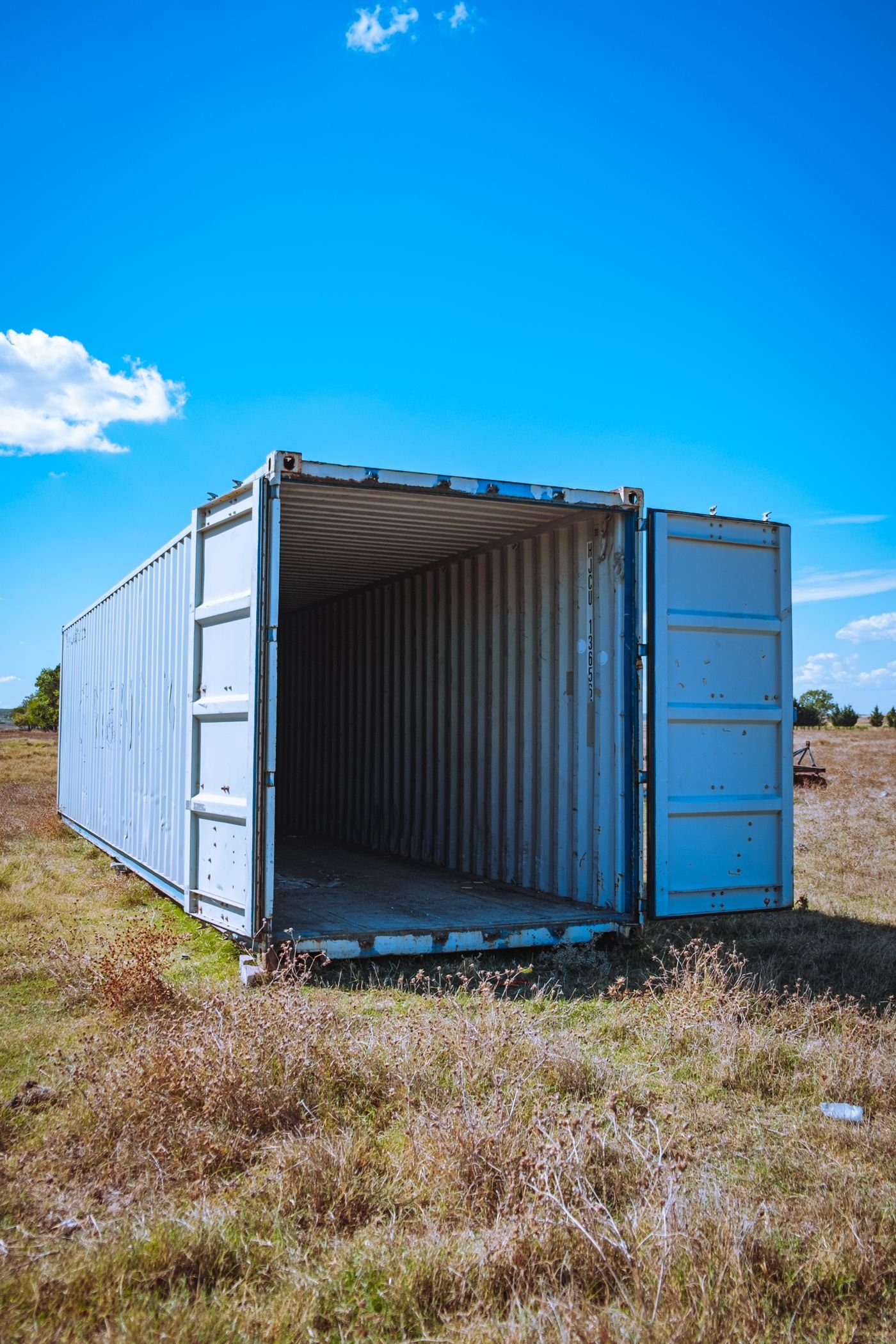
20ft · 40ft · HC
Cargo doors at both ends, so nothing gets buried at the back and you can load from either side.
Best for: workshops, busy stock rooms, drive-through storage.
20ft · 40ft
Full-length side doors that fold back to open the whole side wall, plus the usual end doors.
Best for: wide or palletised goods, pop-up shops, equipment bays.
20ft · 40ft
Two or more sets of side doors, often with internal partitions so each section locks separately.
Best for: shared storage, separating stock, small storage yards.
Fitted to order
A steel roller door cut into the end or side, so you don’t need swing room in front of the doors.
Best for: tight sites, garages and workshops.
20ft · 40ft
No fixed roof. Removable roof bows, a tarpaulin cover and a swing-away door header let you load from above by crane.
Best for: tall machinery, scrap, logs and bulky items.
20ft · 40ft
A removable steel roof panel instead of a tarp. Loads from the top like an open-top, with better security and weather protection.
Best for: heavy, tall cargo that needs a solid lid.
03 · Specialty cargo
Shipping lines use these units for cargo that won’t fit, or shouldn’t go, in a standard box. Most are sourced to order.

20ft · 40ft
A heavy-duty floor with end walls only, and no sides or roof. Collapsible versions fold flat when empty.
Best for: machinery, vehicles, boats, pipe and timber.
20ft · 40ft
Just the reinforced floor and corner castings. Several can be lined up to carry one very large item.
Best for: oversized and very heavy loads.
20ft
About 4’3″ tall and often open-topped. A low profile for loads that are very heavy but take up little space.
Best for: stone, ore, steel, sand and gravel.
20ft
Loading hatches in the roof and a discharge hatch at the door end, so loose cargo can be poured in and tipped out.
Best for: grain, malt, plastic pellets and powders.
20ft
Passive vents along the top and bottom rails keep air moving to stop condensation and mould. Also called a coffee container.
Best for: coffee, cocoa beans, onions and other produce.
20ft frame
A stainless steel tank held inside a 20ft frame, so it stacks and lifts like any other container.
Best for: liquids, chemicals, fuels and food-grade bulk.
20ft · 40ft · 45ft
Slightly wider inside, at about 8’0″, so two Euro pallets fit side by side with no wasted space.
Best for: palletised freight and European logistics.
10ft · 20ft · 40ft
Fitted with a spill sump floor, vents and optional fire-rated lining for storing hazardous materials on site. Check local fire rules first.
Best for: chemicals, fuels, paints, gas cylinders and batteries.
04 · Temperature-controlled
Insulated and refrigerated units protect goods from heat, cold and condensation. Working reefers need a suitable power supply on site.
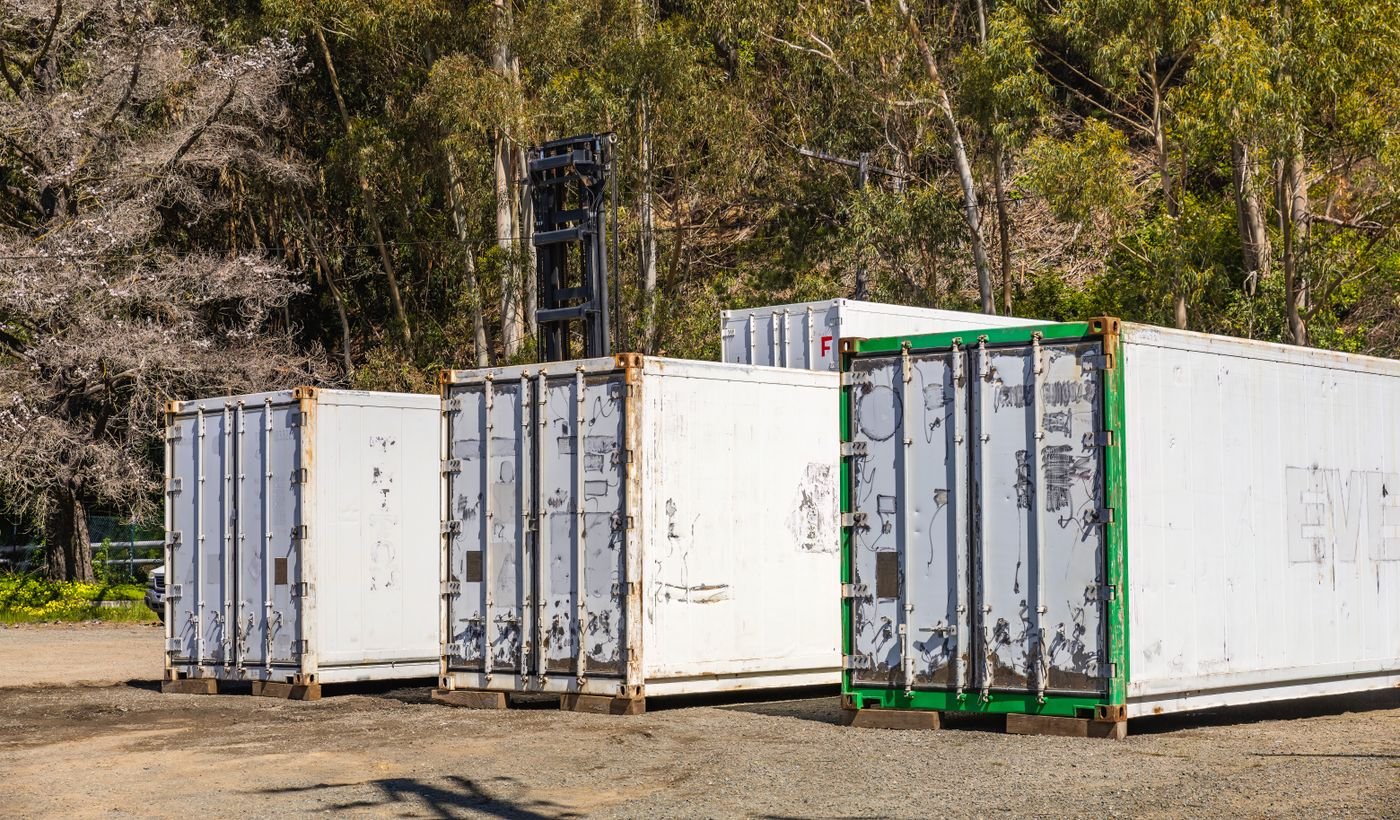
20ft · 40ft HC
A fully insulated box with a built-in refrigeration unit that holds a set temperature, chilled or frozen.
Best for: food, drinks, pharmaceuticals, flowers and events.
20ft · 40ft
A specialist low-temperature reefer that reaches around −76°F (−60°C) for products that must stay deep-frozen.
Best for: premium seafood, medical and lab samples.
20ft · 40ft HC
A reefer whose cooling unit no longer runs. You keep the thick insulation and clean, washable interior at a lower price.
Best for: dry storage that stays cooler, documents, conversions.
Any size
A standard container lined with insulation and wall panels to cut condensation and temperature swings.
Best for: workshops, offices, electronics and sensitive stock.
05 · Converted & modified
We start with a sound container and fit it out for the job. Tell us what it’s for and we’ll quote the build.
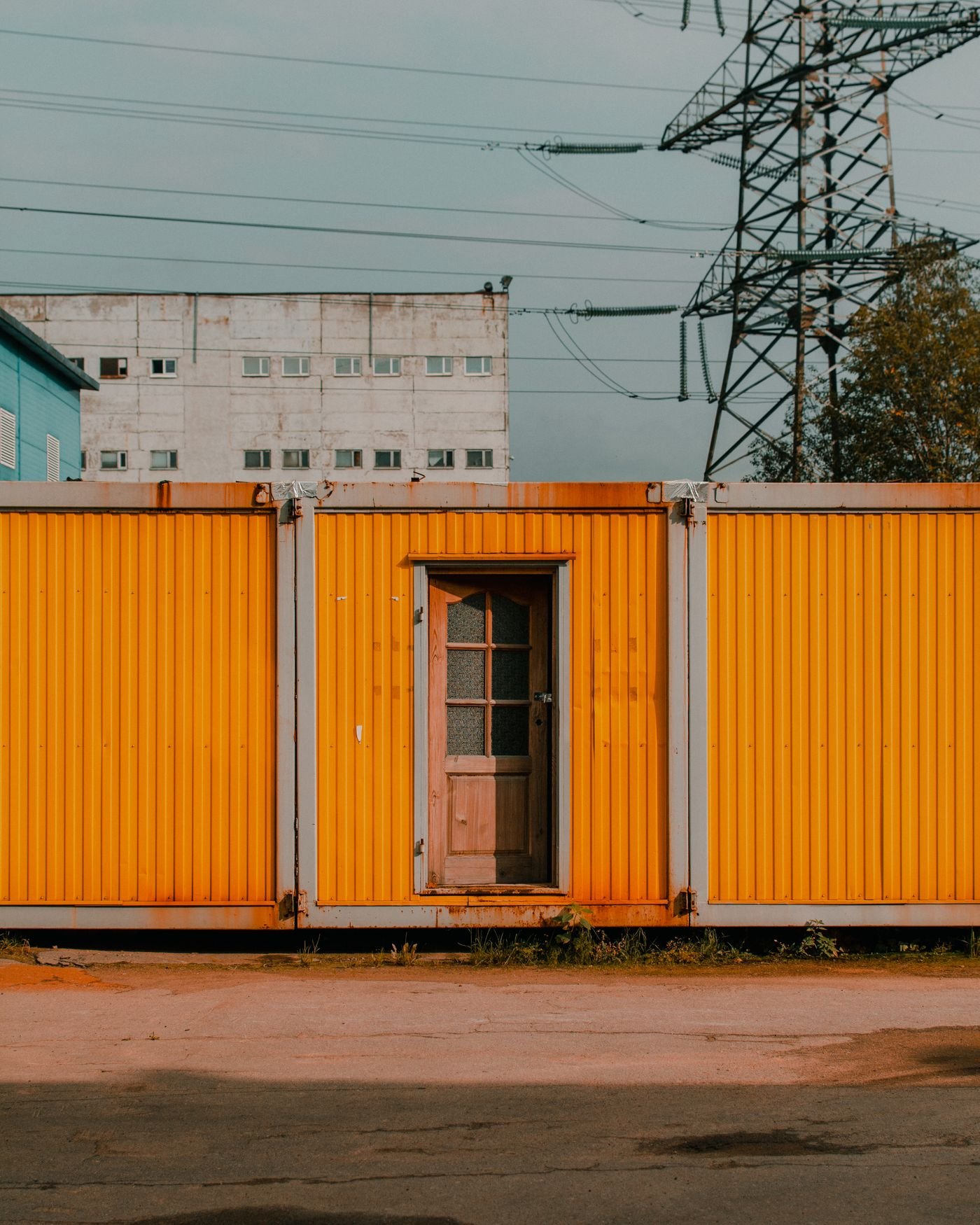
10ft · 20ft · 40ft
Insulated and lined, with a personnel door, windows, lighting, power and optional heating or air-conditioning.
Best for: job sites, yards, sales and security offices.
20ft · 40ft HC
Benches, shelving, lighting, power sockets and ventilation, with roll-up or double doors for easy access.
Best for: maintenance, fabrication, farm and fleet workshops.
Any size
Fitted with shelving or pallet racking so stock stays organised and easy to count.
Best for: retail stock, spare parts and archives.
10ft · 20ft · 40ft
Serving hatches, counters, lighting and painted branding for selling straight from the box.
Best for: cafés, bars, markets and ticket offices.
20ft · 40ft HC
Insulated, with doors and windows cut in and framed, ready for a builder to finish. Check planning and building rules first.
Best for: tiny homes, studios and guest rooms.
10ft · 20ft
Toilets, washbasins, showers or a heated break area for crews working on site.
Best for: construction, events and remote sites.
Any length
A 20ft or 40ft cut to a non-standard length such as 12ft, 15ft or 30ft, then closed with a new end wall.
Best for: odd-shaped sites and exact footprints.
2+ units
Two or more containers joined side by side or stacked, with walls cut out to make one larger room.
Best for: larger offices, classrooms and showrooms.
Quick chooser
Start with what you’re storing or shipping. Here’s where most buyers end up.
Condition grades
The grade tells you how a container has been used and what shape it’s in. It matters as much as the size.
Grade A
Shipped once from the factory with a single load. Straight panels, clean floors, fresh paint and doors that swing easily.
Best for: offices, conversions and anything on show.
Grade B
Structurally sound and fit for shipping, usually with a valid CSC plate. Expect dents, scuffs and some surface rust.
Best for: exporting goods or heavy-duty storage.
Grade C
Retired from shipping but still sealed against wind and rain. Cosmetic wear throughout, and not certified for shipping.
Best for: budget storage on farms, yards and job sites.
Before you buy
Whoever you buy from, these are the things worth checking before you pay.
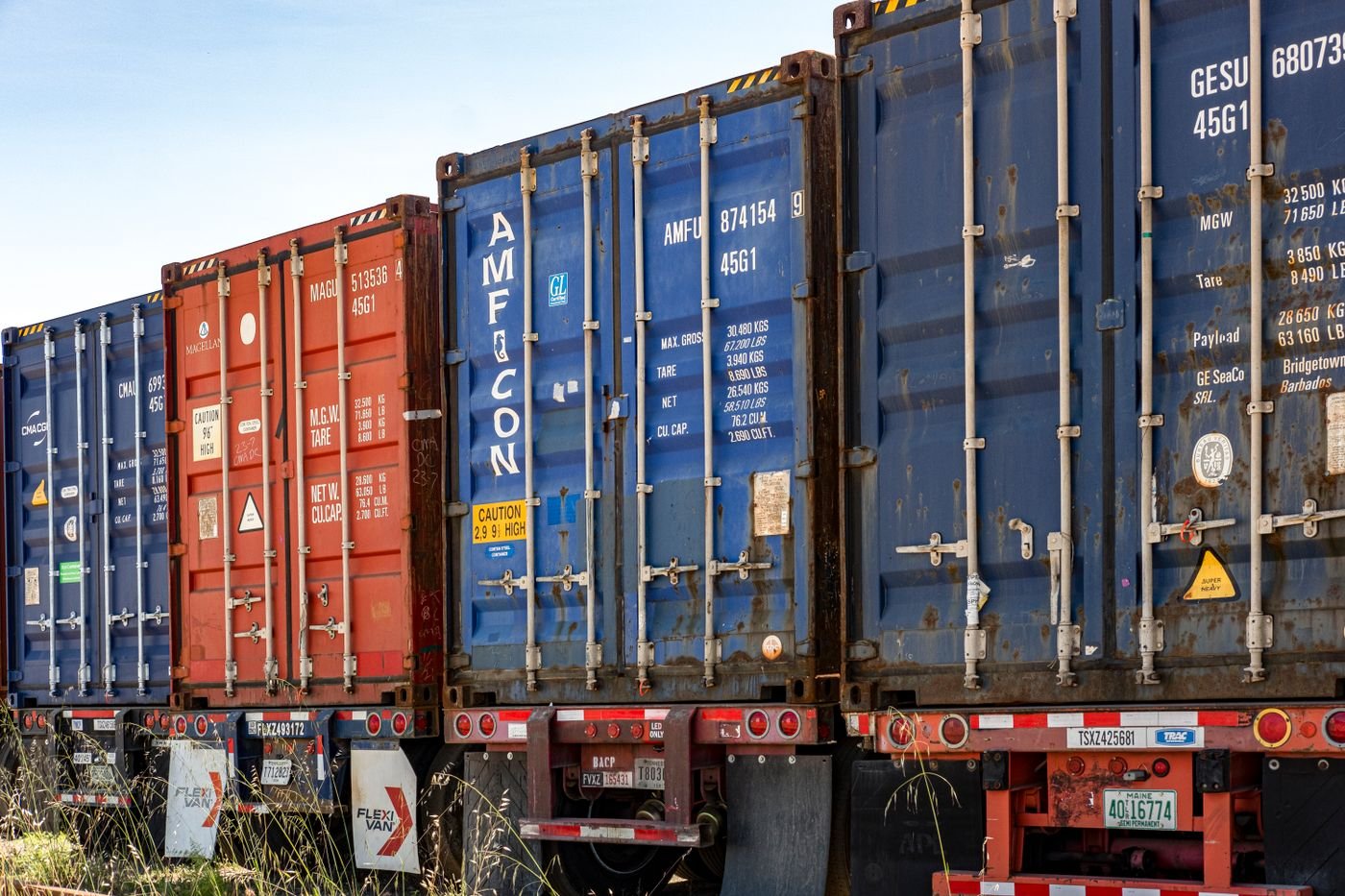
Delivery
Tilt-bed trucks slide the container straight onto the ground, so no crane is needed on most sites.
Questions
Kept on firm, level ground and looked after, a steel container used for storage can last for decades. Touch up scratches and rust spots, and keep the roof clear of standing water.
It depends on where you are and how long it stays. Many areas allow temporary storage without a permit, but permanent placement, offices and homes often need approval. Check with your local council or planning office before delivery.
Yes, if it’s cargo-worthy and has a valid CSC safety approval plate. Wind & watertight units are for storage only and shouldn’t be used for shipping.
A high cube is 9’6″ tall instead of 8’6″, which gives you about a foot more headroom inside. The footprint is the same.
Yes. We can add doors, windows, vents, shelving, insulation, lighting and power, or paint it in your colours, and deliver it ready to use.
Standard sizes usually are. Specialty, refrigerated and converted units are often sourced or built to order, so ask us about availability and lead times in your area.
Tell us the type, the size and where it’s going, and we’ll come back with a quote.